 PoseToki
PoseToki · Drawing guide
A 30-second gesture line for a walking figure
A line of action is not a tracing of the spine. It summarizes where the whole pose is going. In pose PT014, set the face and fingers aside and first compare the head, rib cage, pelvis, and leading foot.
Updated October 2, 2026
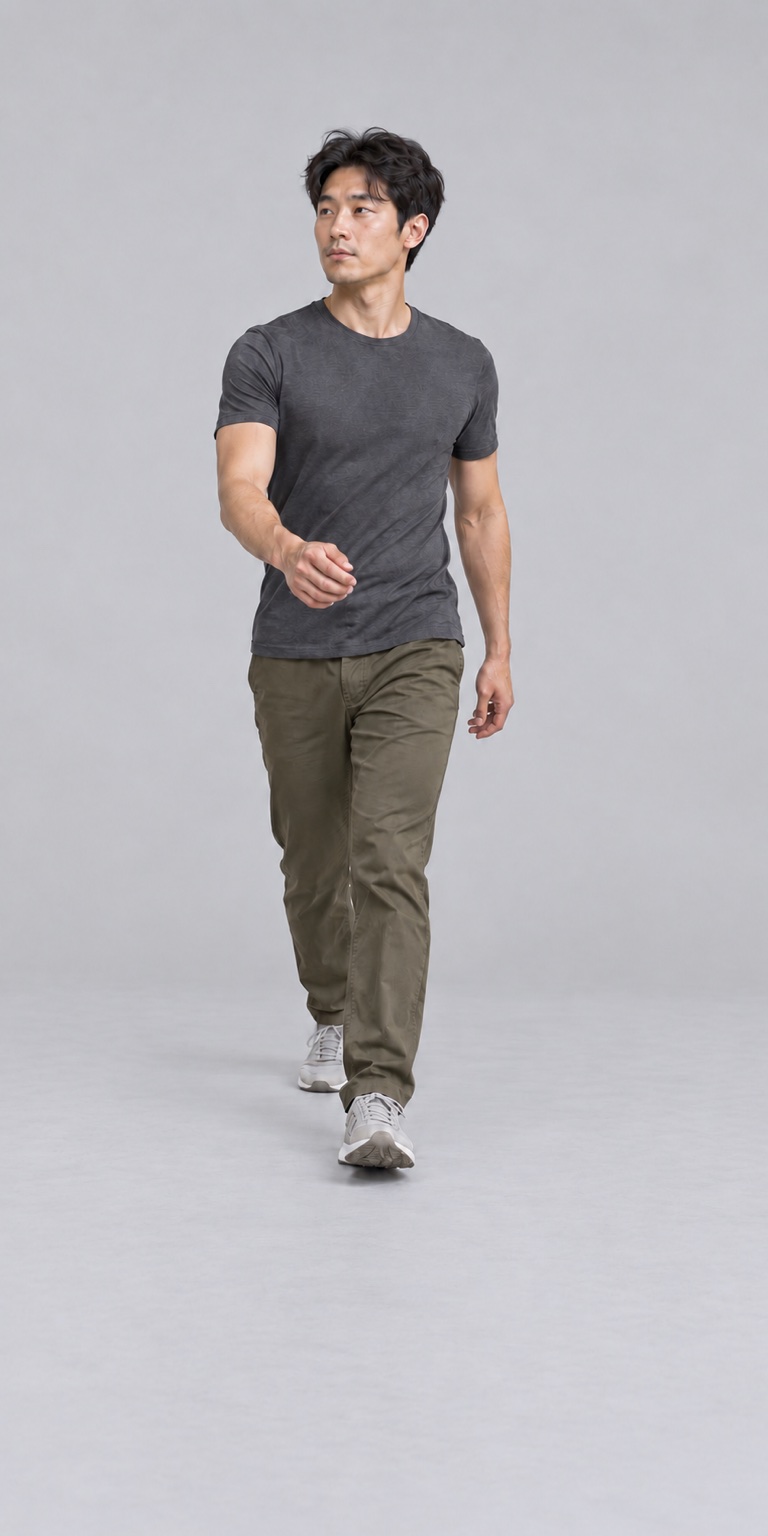
Three points to find before drawing
- The head looks toward the left of the frame, but the torso's main axis continues downward. Do not confuse gaze with the direction of the entire body.
- Think of the rib cage and pelvis as two simple masses rather than tracing the shirt and trousers. Connect their flow with one confident line.
- Compare the height and overlap of the front and rear shoes. Decide which foot the gesture line moves toward.
These reference photos were generated for PoseToki with AI. Use them to practice observation, not as anatomical ground truth.
Draw the same pose at three speeds
- 30 seconds
Place a small oval for the head, then draw one flow line through the torso toward the leading foot. Leave out the arms and face.
- 1 minute
Add two masses for rib cage and pelvis; connect the limbs with four long axes. Keep only the front–back relationship of the feet precise.
- 3 minutes
Preserve the large structure. Check the bend of each knee, shoulder rotation, and where the shoes touch the floor. Add folds only if time remains.
A common mistake—and a correction
If you lean the entire torso left simply because the head looks left, the walk loses its balance. Before erasing your first line, compare the supporting leg under the pelvis and the positions of both shoes. The useful line is the one that explains why the figure can stand, not merely the most elegant curve.
Transfer the idea to another pose
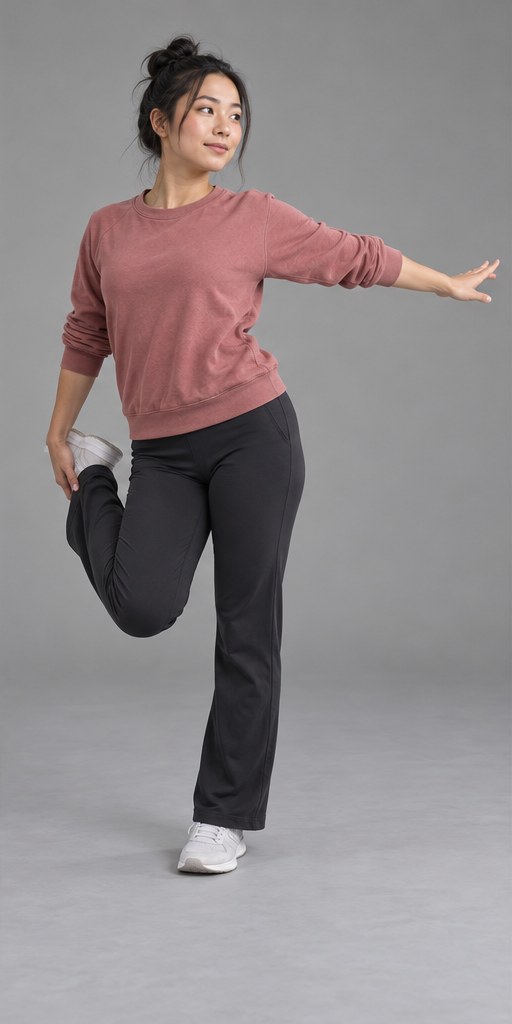
It is tempting to follow the extended arm with one long gesture line. The weight, however, is carried by the foot on the floor. Draw a line from head through pelvis to that foot first; then attach the arm and lifted leg. Write one sentence explaining why the gesture line differs from the walking pose.
Questions for your review
- Can you read the walk with the hands and face covered?
- Does the rib-cage-to-pelvis flow make sense with the feet?
- Did you lose the supporting leg while drawing the moving arm?
Try it in the studio
In the studio, choose 30 seconds and 5 poses to draw only the big flow. Repeat with 1 minute and 5 poses. Instead of polishing one sheet, use the second set to find the supporting foot you missed in the first.
Start a pose session →